9 Crown Row, Bracknell, Berkshire, RG12 0TH
9 Crown Row, Bracknell, Berkshire, RG12 0TH
62 High Street, Sunninghill, Ascot, Berkshire, SL5 9NN


Sales Consultant
Millie’s passion for property runs in the family – inspired by her Dad’s long-standing career in estate agency, she’s always been drawn to the industry. After completing a week of work experience with Duncan Yeardley in 2022, she knew this was where she wanted to build her future. Since then, Millie has thrown herself into the role with enthusiasm and dedication, always striving to learn, grow, and become the best agent she can be. Outside of work, you’ll most likely find her at the gym, getting lost in a good book, or spending quality time with family and friends.
Top of my bucket list is…
To travel around South East Asia and Australia.
When I was younger, I wanted to be…
A police officer.
On Sunday mornings, you can usually find me…
In bed until midday, followed by a pub lunch!
If I were a superhero, my superpower would be…
Reading minds.
The thing I like best about my job is…
The lovely people I have the privilege of working with, along with the help and support they provide.
The person I’d most like to go for a drink with is…
Princess Diana.
9 Nov 2026

In this blog
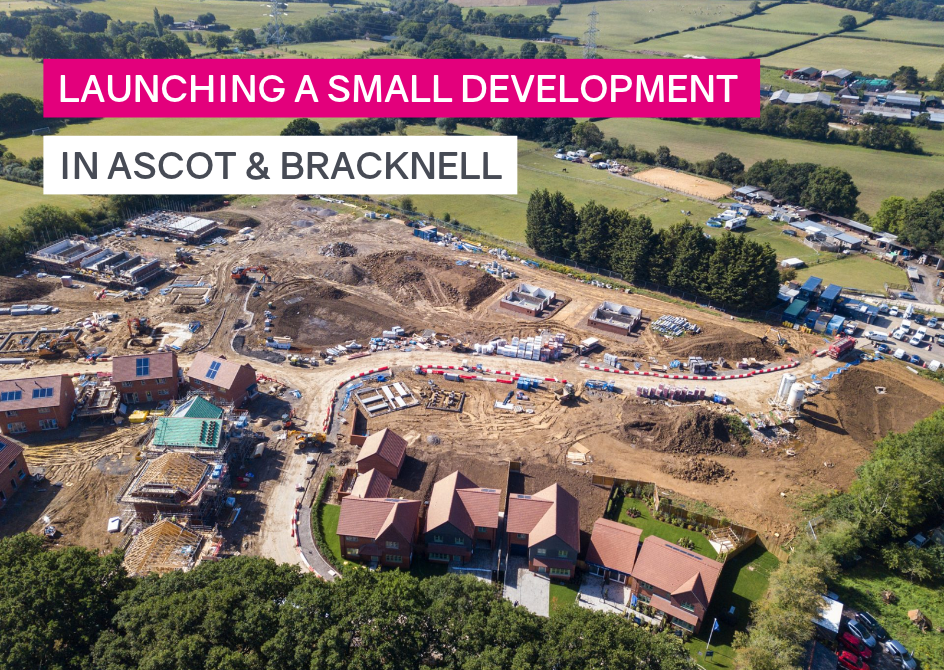
A development of ten homes is sometimes treated as if it needs a lighter touch than a scheme of a hundred. The logic feels reasonable: fewer homes, less to manage, less to plan. In practice it works the other way round. On a smaller scheme there is less room for error, so every decision carries more weight, not less.
On a development of ten homes, each one is a tenth of the whole project. Price and time the first homes well and they set the pace for everything that follows, with early buyer feedback shaping the rest. Get them wrong and the effect is just as quick in the other direction. That is why a smaller development needs a considered plan before the first home goes on sale, not a reduced version of one.
Because the maths is less forgiving. On a large development, one slow plot is absorbed by the pace of the rest. On a scheme of five to fifty homes, one home sitting unsold is a visible share of the whole site, and buyers read it as a sign.
A single plot type priced too optimistically will stall, and prospective buyers draw conclusions about the rest of the development from it. Two unsold homes on a scheme of ten does not read as two homes. It reads as a site that is not selling. The smaller the scheme, the faster that story takes hold, which is exactly why the early decisions deserve more care rather than less.
On evidence, not assumption. Your buyers will almost always be local, and on a site of this size there are rarely other new developments nearby to compare against. So buyers measure your homes against the older houses for sale on the surrounding streets. What those houses actually sell for is what sets your prices.
That calls for real detail. Named roads, what homes sold for rather than what they were listed at, and how long each one took. Pricing on a smaller scheme is usually set as an average and then divided across the plots, and the risk hides in that division. One home carrying the wrong number can hold up the feel of the whole site. We have sold homes in these streets for decades, and that is where our pricing evidence comes from, not a broad regional estimate.
Yes, and arguably more than a large one. A launch plan is simply a clear route to market: which homes go first, how they are priced and presented, and how the release is sequenced so momentum builds rather than stalls.
On a smaller development, sequencing is a genuine lever. Leading with the home most likely to sell sets a confident pace and gives you early feedback to apply to the rest. Releasing everything at once, with no plan behind the order, leaves the result to chance. A considered launch creates confidence from the first week, and on a small scheme the first few weeks are the ones that matter most.
More than its cost suggests. A smaller scheme should be marketed to the same standard as a large one. Clear, high quality visuals and a consistent message make a development feel intentional and well handled, and that feeling carries into how buyers judge the price.
The opposite is just as true. Thin marketing makes a good scheme look like an afterthought, and buyers quietly adjust what they think it is worth. Presentation is not decoration. It is part of how value is communicated, and it is one of the simplest things to get right from the start.
Buyer reach works when it is relevant, not when it is wide. A family house on the edge of Warfield or Winkfield sells to a different buyer than a flat near Ascot or Bracknell station, and the two are not looking in the same way or at the same time. The likely buyer for each home type should shape the whole approach, from the message to the timing.
This is where local knowledge earns its place. Knowing who is already registered and looking in your area, at your price, turns a general marketing push into a targeted one. Sales and marketing are far stronger when the home and the buyer are matched from the outset, rather than hoping the right person happens to walk through the door.
Feedback that helps you make decisions, not just activity reported back. There is a real difference between being told how many viewings took place and being told what those viewings revealed: which home type is drawing interest, where the hesitation is, and what that means for the next release.
On a smaller scheme that feedback loop is quick and valuable. Early buyer reaction to the first homes should inform how you price, present and sequence the rest. A good partner helps you refine the strategy as you go, so the launch improves week by week rather than running on a fixed plan regardless of what the market is telling you.
A few things matter more than size of firm or length of brochure. Local credibility, so the pricing advice is grounded in homes that have actually sold nearby. Commercial judgement, so you are told where the risk sits rather than only what you want to hear. A clear launch process, so nothing is left to chance in the first few weeks. In-house delivery, so the same team that advises you is the team that sees the sales through. And a willingness to treat a smaller scheme as seriously as a large one from day one.
A smaller development does not need a smaller standard. It needs a partner who understands the detail, knows the local market and treats getting the launch right as the priority it is.
At Duncan Yeardley, a Land and New Homes consultation is a working session on your site. We look at what similar homes nearby are selling for, who is likely to buy each home type, where your pricing risk sits and how to sequence the launch. You leave with a view you can act on, whether or not you appoint us, and nothing has to be committed to have the conversation.
Book a Land and New Homes consultation with us today, or request a local market update for a clearer picture of buyer demand and pricing across Ascot and Bracknell.
Get in touch